
Gail Clement
Fiber Artist | Sashiko Educator | Textile Researcher
Based in Asheville, North Carolina, I explore the traditions of hand stitching, textile repair, and cloth reuse through daily practice, focused research, and careful teaching. My particular focus on Japanese Sashiko reflects a deep respect for fiber resources and heartfelt appreciation for the memory and spirit stitched into fabric over time.
My work celebrates the practical wisdom of traditional textile practices—the conservation of fabric, the repair and strengthening of everyday objects, and the transformation of necessity into beauty.
Through GaFeltaStitch, I share my appreciation for Sashiko’s history and cultural traditions while encouraging others to discover the meaningful, rhythmic, and creative possibilities of hand stitching.
Artist Statement
I was first drawn to Sashiko by its practical purpose: strengthening everyday textiles, conserving precious fabric, and extending the useful life of clothing and household objects. I find something deeply meaningful in the idea that ordinary things, made to serve a purpose, can also be graced with beauty and harmony.
My Sashiko practice is rooted in a desire to preserve the wisdom of Japanese textile traditions developed in response to the challenges of their time, while exploring how those traditions can adapt and remain meaningful today. I am fascinated by the ingenuity of generations of stitchers who transformed practical necessity into expressions of skill, creativity, resilience, and beauty.
As a fiber artist, I explore traditional Sashiko techniques alongside contemporary possibilities in pattern, color, texture, and embellishment. I believe that understanding and respecting the origins of a tradition provides a foundation for thoughtfully carrying it forward.
As an instructor, my greatest satisfaction comes from watching students develop technical confidence, deepen their appreciation of Sashiko’s history and cultural context, and discover their own creative possibilities—all while embracing its enduring intention to preserve, conserve, and bring beauty and joy to everyday life.
Biography
Gail Clement is a fiber artist and Sashiko instructor based in Asheville, North Carolina. Her work explores the historical roots of Japanese Sashiko, its diverse regional traditions, and its continuing evolution as a contemporary textile practice.
Gail’s interest in Japanese stitching traditions has led her to participate in multiple textile study trips to Japan, exploring regional practices including Koginzashi, Yuza Sashiko, Chiku Chiku, Nagai Sashiko, and Hida Sashiko. Her research informs her teaching, connecting traditional techniques with the cultural histories, practical needs, and creative adaptations that have shaped them.
Gail is closely affiliated with Local Cloth Fiber Studio in Asheville, where she teaches Sashiko workshops, and is also an instructor at the John C. Campbell Folk School. She teaches for needlework guilds, fiber arts festivals, and community education programs.
A longtime Repair Café volunteer, she brings a commitment to textile conservation, repair, and reuse to her practice.
Gail encourages students to appreciate the cultural traditions and purposeful origins of Sashiko while discovering the rhythm, beauty, and creative possibilities of stitching.

Teaching Approach
Having studied with Japanese Sashiko masters in the US and Japan, I believe that learning Sashiko involves more than mastering stitching techniques and patterns. Understanding the circumstances in which these practices developed—and the people who sustained them—deepens our appreciation of the textiles we create.
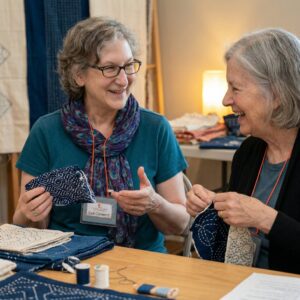
My workshops combine historical and cultural context with hands-on instruction in traditional techniques. Students develop the skills and confidence to practice Sashiko thoughtfully while exploring opportunities for personal expression.
Whether learning the fundamentals of rhythmic stitching, exploring regional patterns, or incorporating Sashiko into contemporary textile projects, I encourage students to approach their work with curiosity, patience, and joy.